A listed façade rarely fails because of appearance alone. It fails when thermal targets, occupant comfort and conservation constraints collide, and conventional glazing cannot satisfy all three. That is exactly where heritage vacuum glass windows have become a serious specification option – not as a compromise, but as a higher-performance route for projects that need traditional aesthetics with modern insulation.
For architects, developers and specialist contractors, the issue is straightforward. Older buildings and heritage-style replacements often depend on slim glazing profiles, narrow rebates and traditional frame proportions. Standard double glazing can be too thick, triple glazing is usually too bulky, and both can alter sightlines in ways that planning teams, conservation officers and clients will reject. Vacuum insulated glass changes that equation by delivering far stronger thermal performance in a much slimmer build-up.
What makes heritage vacuum glass windows different
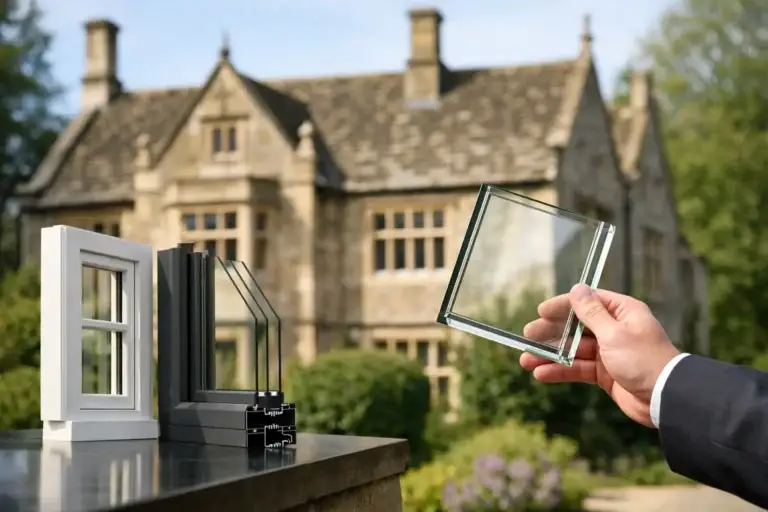
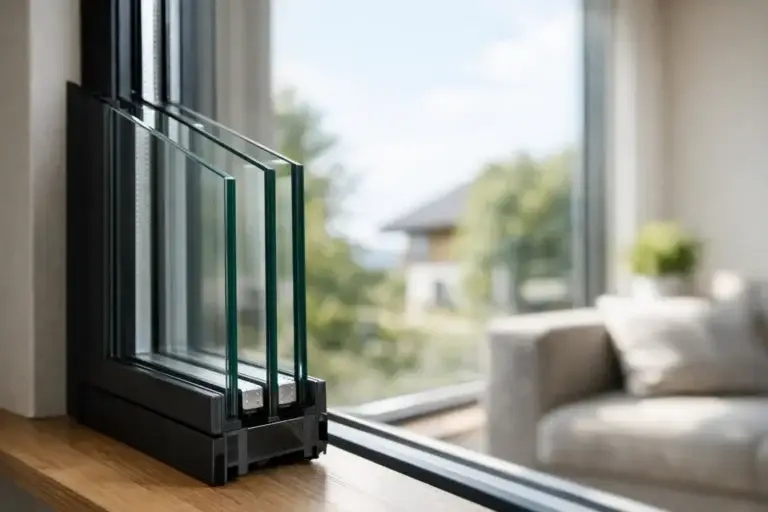
The defining advantage of heritage vacuum glass windows is that they pair a traditional visual language with a high-performance insulated unit that does not need the cavity depth of standard insulated glazing. Instead of relying on gas-filled spacing between panes in the way conventional double or triple glazing does, vacuum glass uses a vacuum gap between two panes. Because a vacuum is a highly effective barrier to heat transfer, the unit can achieve very low U-values with a significantly reduced overall thickness.
That matters in heritage and heritage-style applications because glazing thickness is never just a number on a datasheet. It affects beading details, sash weights, putty lines, frame sections and the overall character of the elevation. On refurbishment schemes, it can also determine whether existing timber or steel frames can be retained, adapted or must be replaced entirely.
In practical terms, a vacuum insulated unit allows designers to pursue a slenderer glazing solution without accepting the weak thermal performance associated with single glazing. It is a technical answer to a design constraint that has frustrated the market for years.
Why heritage projects need a different glazing strategy
A modern curtain wall and a Georgian townhouse should not be approached with the same glazing logic. Heritage and conservation-led projects bring specific constraints that make standard insulated units less suitable.
The first is profile depth. Period windows were not designed around thick sealed units. Trying to force a conventional double-glazed or triple-glazed build-up into a slender sash or metal frame often leads to one of two outcomes: either the frame has to be noticeably enlarged, or the glazing specification is watered down to fit. Neither is ideal.
The second is visual fidelity. In heritage-sensitive work, reflections, sightlines and edge detailing matter. Bulky units can distort the appearance of original fenestration. Even where planning approval is not a formal issue, clients still expect upgraded windows to look right from street level and from inside the building.
The third is performance expectation. Occupants no longer accept draughty rooms, cold internal glass surfaces or high heating loads simply because a building is old. Commercial operators, housing providers and private owners all face pressure to reduce energy consumption while preserving architectural character. That is where vacuum glass offers a more credible balance than legacy alternatives.
Thermal performance without bulk
The strongest commercial argument for heritage vacuum glass windows is thermal efficiency per millimetre of glazing thickness. That ratio is what sets vacuum glass apart from conventional alternatives.
Where standard double glazing depends on a wider cavity to improve insulation, vacuum glass reaches much lower heat transfer through its evacuated space. The result is a unit capable of delivering insulation levels far beyond single glazing and often competitive with far thicker systems, while remaining slim enough for demanding frame conditions.
For specifiers, this can unlock options that would otherwise be closed off. Existing frames may be retained where total replacement looked inevitable. New heritage-style windows can be designed with finer sections. Refurbishment schemes can improve operational energy performance without the visual penalty of heavier glazing packages.
There is, however, a practical caveat. Window performance is never determined by centre-pane values alone. Frame construction, spacer details, perimeter installation and airtightness still matter. A poor frame paired with advanced glass will not deliver the full benefit. On serious projects, the correct approach is whole-window performance, not isolated glass performance.
Acoustic performance in real buildings
Thermal improvement is usually the headline, but sound reduction is often just as valuable in occupied heritage buildings. Many period properties sit on busy streets, near rail corridors or in dense urban centres where external noise undermines usability and comfort.
Vacuum insulated glass can provide strong acoustic benefits because the vacuum layer changes the way sound travels through the unit. In practical terms, this can help create quieter interiors without relying on excessively thick multi-pane builds that are difficult to integrate into traditional frames.
Again, context matters. If the project faces extreme low-frequency noise, the full glazing make-up and frame system need to be assessed carefully. Acoustic performance is not one-size-fits-all. But for many mixed-use, residential, hospitality and civic applications, heritage-focused vacuum glazing offers a route to better internal comfort with less visual compromise.
Heritage appearance is not a secondary issue
Too many glazing discussions treat aesthetics as an afterthought, particularly when the specification team is under pressure to improve energy performance quickly. In heritage work, that is a mistake. Appearance is part of performance because a solution that fails planning review, damages building character or is rejected by the client is not a viable solution at all.
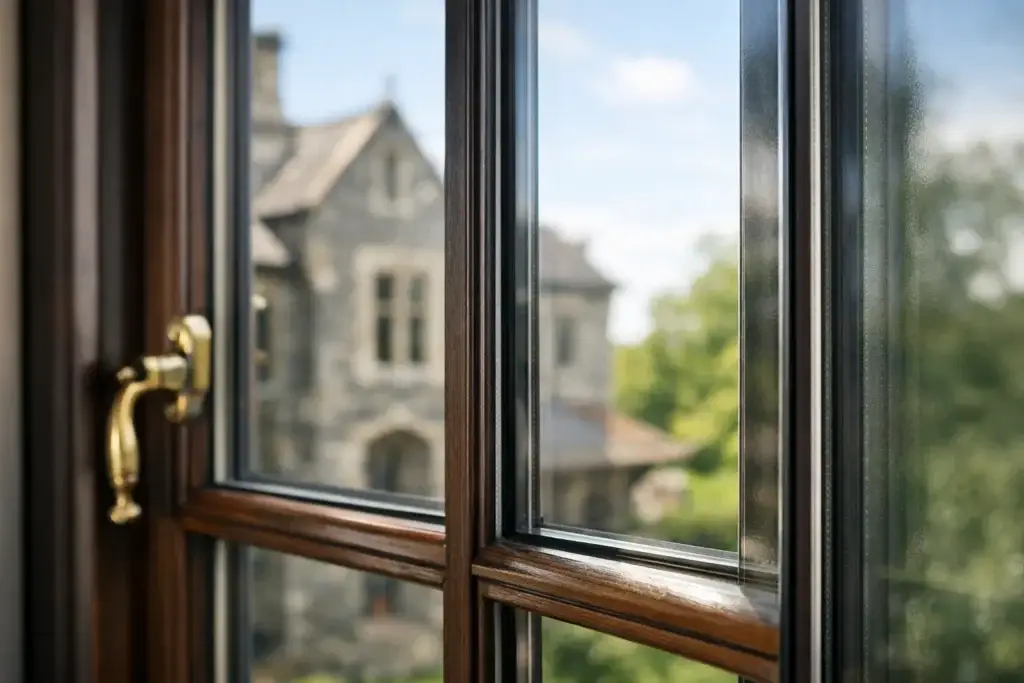
This is why slim vacuum units are so relevant. They support traditional glazing bars, narrow frame dimensions and more authentic window proportions. For steel-look, timber sash and conservation-style applications, that dimensional control is often the deciding factor.
It also has implications for retrofit practicality. If a glazing unit can work within the limits of an existing frame design, the project may avoid deeper structural alteration, wider making-good packages and the cost escalation that follows. Better specification at the glass level can simplify the wider envelope strategy.
Where heritage vacuum glass windows work best
The most obvious use case is listed and conservation-sensitive refurbishment, but the application range is wider than that. Heritage vacuum glass windows also suit premium residential developments, boutique hospitality schemes, educational buildings, civic refurbishments and commercial retrofits where planners, owners or designers want traditional character without low-performance glazing.
They are equally relevant for new-build projects that borrow from historic forms. Many architects are asked to deliver period-inspired façades that still meet modern thermal targets. In these schemes, vacuum glazing helps reconcile the visual ambition with current performance requirements.
This is particularly relevant in the UK, where the building stock includes a large volume of older properties that need energy upgrades but cannot simply absorb standard modern window systems without design consequences. A thinner high-performance unit is not a niche feature in that context. It is a strategic advantage.
Trade-offs specifiers should assess early
No high-performance glazing product should be specified on marketing language alone. The right decision depends on the project, and heritage vacuum glass windows should be assessed against structure, budget, visual requirements and installation method from the outset.
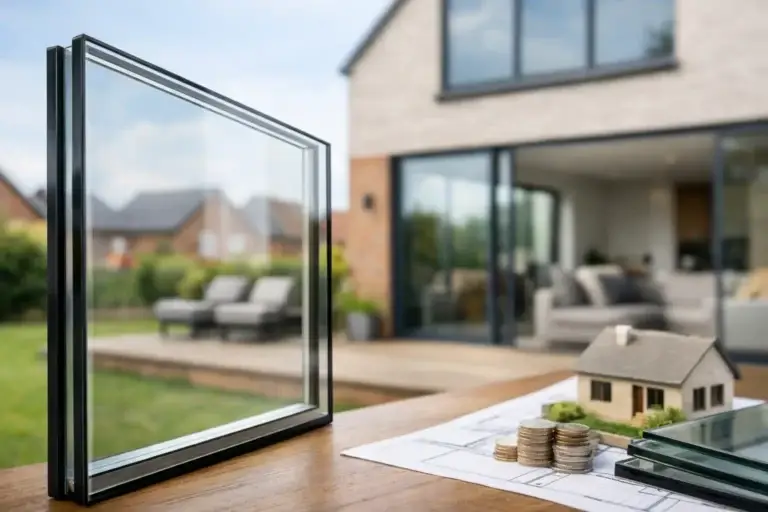
Cost is one consideration. Vacuum insulated glass is a premium technology, so the upfront unit cost is usually higher than basic double glazing. For low-value or short-hold projects, that may narrow the case. But focusing only on initial cost can misread the economics. Better insulation, lower running costs, stronger occupant comfort and reduced need for bulky frame redesign often improve the lifecycle proposition substantially.
Frame compatibility is another factor. Not every legacy frame is suitable for reglazing, and not every heritage-style product on the market is engineered to the same standard. Edge detailing, durability, loadings and installation tolerances need proper technical review.
Then there is project intent. If the building requires absolute visual replication of historic glass irregularity, the specification conversation becomes more nuanced. If the main aim is to preserve overall proportions while sharply improving thermal and acoustic performance, vacuum glazing is often a stronger fit.
For decision-makers comparing alternatives, the real question is not whether vacuum glass is newer or more advanced. It is whether it solves the exact conflict the project presents. On many heritage-led schemes, it does.
A performance-led case for long-term value
Buildings with traditional façades are under growing pressure to perform like modern assets. Owners want lower energy demand. Occupiers want comfort. Designers need to respect the architecture. Contractors need practical solutions that can actually be delivered. Heritage vacuum glass windows answer that brief more effectively than conventional glazing systems built around thickness.
That is why performance-led manufacturers such as Werkman Tech are seeing increasing relevance in this category. The market is moving beyond simple replacement glazing and towards technically credible, long-life systems that reduce heat loss, improve acoustic comfort and preserve design intent.
When a project calls for narrow sightlines, strong insulation and a more sustainable upgrade path, the specification should not start from what traditional glazing has always been able to do. It should start from what the building needs next.