A glazing specification can undermine an otherwise low-carbon building before it reaches site. Large areas of conventional double glazing can drive heat loss, increase plant demand and force a choice between thermal performance and the slim sightlines required by heritage, refurbishment and façade projects. Sustainable glazing materials must therefore be assessed as building systems, not simply as panes of glass with a recycled-content claim.
For specifiers, the question is not which material sounds greenest in isolation. It is which glazing solution delivers the lowest credible whole-life impact while meeting U-value, acoustic, safety, daylight and design requirements. That means examining operational energy, embodied carbon, service life, replacement risk and the amount of material needed to achieve the target performance.
What makes glazing genuinely sustainable?
Glass is durable, recyclable and essential to daylight-led design, but it is energy-intensive to manufacture. Its sustainability case depends on how effectively it reduces a building’s energy demand over decades, and whether it avoids early replacement or unnecessary frame alterations.
A high-performance unit can reduce heating demand, improve internal comfort and help maintain more stable perimeter temperatures. Those benefits matter in homes, commercial property and specialist environments alike. Yet operational savings alone do not settle the issue. A solution that requires substantially more glass, wider framing, frequent replacement or extensive alterations to the building fabric may carry a higher material and carbon burden than its headline thermal value suggests.
The strongest specifications balance five connected factors:
- thermal performance, measured through centre-pane and installed U-values;
- embodied impact from glass, coatings, spacers, seals, frames and transport;
- service life and resistance to seal or unit failure;
- compatibility with existing openings and façade geometry; and
- performance beyond heat loss, including acoustics, solar control, safety and light transmission.
This is why a simple comparison between double and triple glazing is often inadequate. The better option depends on the frame, opening depth, orientation, building use and the level of intervention the project can accommodate.
Sustainable glazing materials: performance starts with design
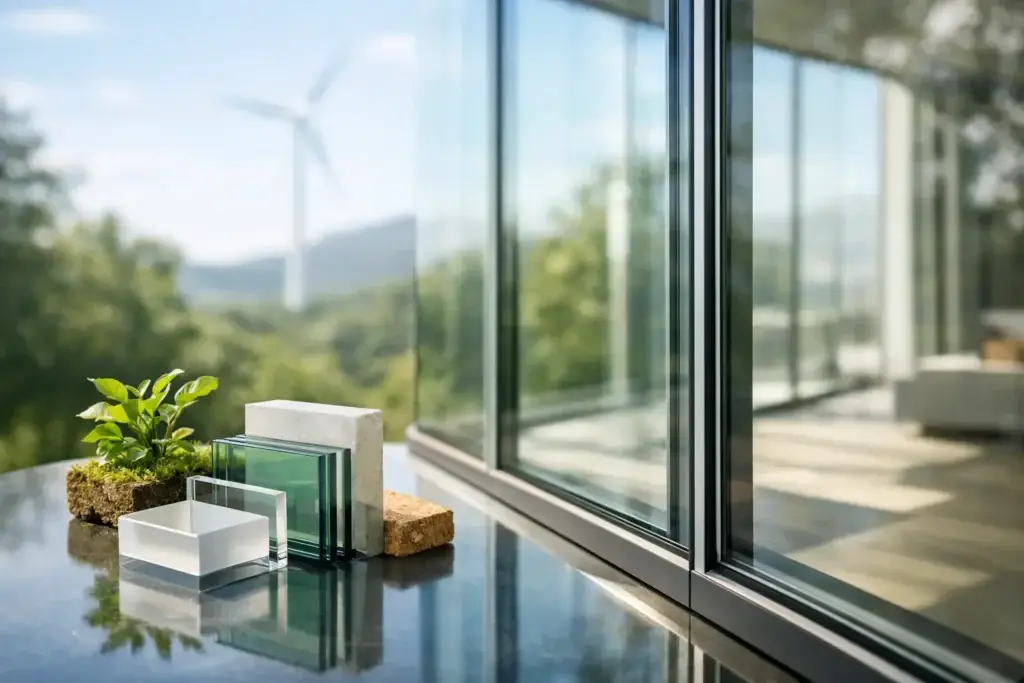
The phrase sustainable glazing materials covers more than the glass itself. It includes low-emissivity coatings, inert gas fills, warm-edge spacers, laminated interlayers, framing materials and the seal systems that preserve the unit’s performance. Each component has a role, but the assembly must work as one.
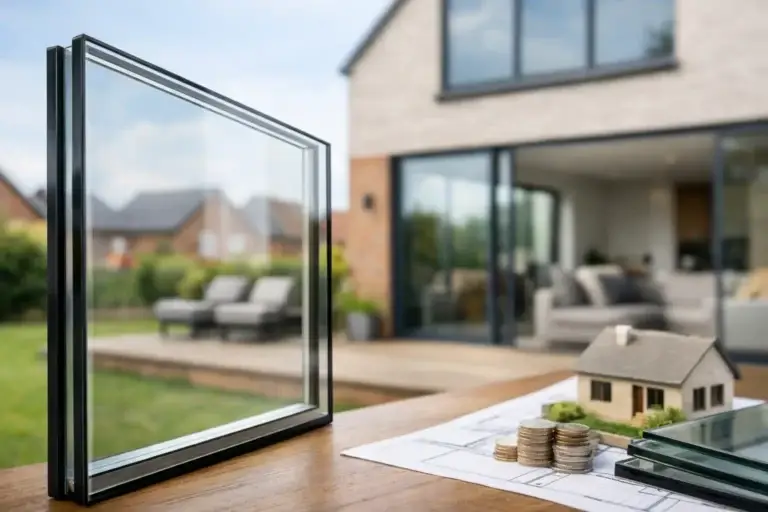
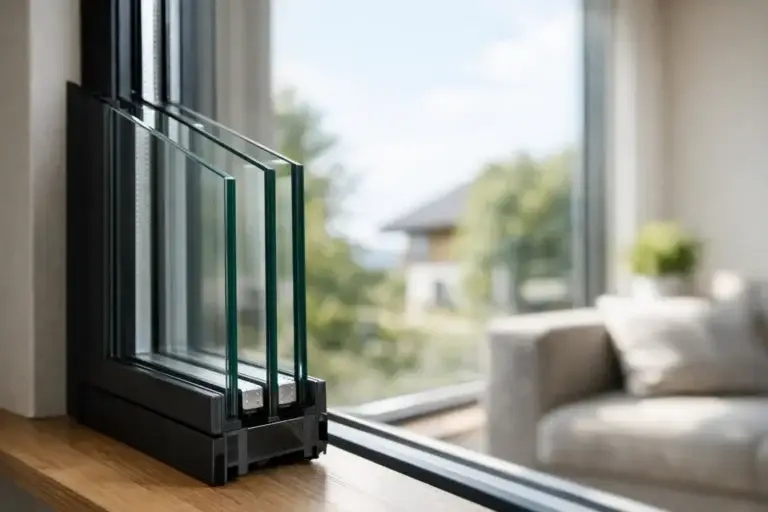
Low-emissivity coatings reduce radiant heat transfer while retaining useful daylight. Argon-filled double glazing remains a practical improvement over older units in many applications. Triple glazing can achieve very low U-values, particularly in new-build envelopes designed around its depth and weight. However, it uses an additional pane, extra coatings and more spacer and sealing material. It can also demand deeper rebates, heavier sashes and larger frame sections.
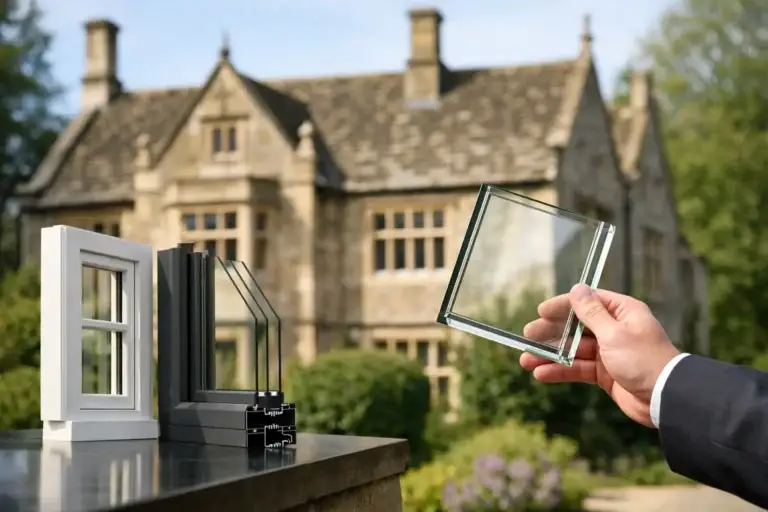
Those trade-offs become particularly significant in refurbishment. Replacing a slim single-glazed unit with a thick triple-glazed construction may require new frames or compromise the proportions of a traditional window. The carbon and cost of that intervention should be included in the decision, rather than treated as an afterthought.
Why vacuum insulated glass changes the calculation
Vacuum insulated glass, or VIG, uses a very small evacuated gap between panes. By removing the gas from the cavity, it sharply limits convective and conductive heat transfer. Combined with low-emissivity coatings and a durable edge seal, this enables high insulation performance in a remarkably slim glass build-up.
The key sustainability advantage is material efficiency. Where a project needs a strong thermal upgrade but cannot accept the depth, weight or framing implications of triple glazing, VIG can deliver a lower-U-value route with less glass volume and less disruption to the surrounding construction. It can make retained frames, slim-profile systems and sensitive façades viable candidates for substantial energy improvement.
That does not mean VIG is automatically the right answer in every opening. Units must be selected for the intended application, loading, edge detailing, safety requirements and frame performance. The visible support pillars within VIG also need to be understood in relation to viewing distance and architectural expectations. Good specification treats these characteristics as engineering criteria, not surprises discovered after procurement.
Operational carbon is only part of the equation
Heating and cooling loads remain a major source of building emissions. Improving glazing thermal performance can make a measurable contribution to lower energy use, particularly where old single glazing, poor double glazing or thermally weak frames are being replaced.
But a low centre-pane U-value does not guarantee a low installed U-value. Frame conductivity, edge effects, fixings, gaskets, cavity insulation and installation quality all influence the result. A high-performance pane in a poorly detailed frame will not perform as the product data alone suggests.
Specifiers should therefore request whole-window or whole-façade calculations where possible. This is essential for Passive House targets, high-performance residential projects, curtain walling and buildings with extensive glazing. It is also the practical way to identify whether investment is better directed towards the glass, the frame, the installation detail or a combination of all three.
Solar gain requires the same discipline. A highly insulating unit can still contribute to overheating if its solar factor is wrong for the orientation and shading strategy. South- and west-facing elevations, highly occupied spaces and lightweight buildings may require solar-control coatings, external shading or different glass specifications across elevations. Sustainability is not achieved by minimising heat loss while ignoring summer comfort.
Durability is a carbon metric
A glazing unit that performs for decades is generally a better environmental proposition than one that requires premature replacement. Failed seals, condensation within cavities, coating degradation and frame incompatibility all create avoidable material waste, labour, access costs and disruption.
This places edge-seal technology, manufacturing quality and application suitability at the centre of sustainable procurement. Buyers should look beyond an initial U-value and ask how the unit has been engineered to retain its vacuum or gas fill, how it responds to thermal movement, and whether the supplier can support the required dimensions, safety configuration and installation method.
Durability also supports commercial value. A long service life reduces lifecycle expenditure and limits the need for disruptive replacement programmes in occupied offices, hotels, public buildings and residential developments. For developers and asset owners, that is not an environmental bonus. It is a direct reduction in operational risk.
Retention and retrofit can outperform replacement
The most sustainable frame is often the one that does not need to be removed. Retaining sound existing frames can avoid demolition waste, preserve architectural character and reduce the embodied impact of replacement joinery or aluminium systems. The challenge is achieving modern thermal performance within the available rebate depth.
Slim vacuum insulated glass is particularly relevant here. It allows a significant thermal upgrade in applications where conventional double or triple glazing may be too thick or heavy. Heritage windows, listed-building projects, steel-framed glazing and constrained façade systems can benefit when the correct VIG configuration is matched to the existing assembly.
However, retention should never be assumed to be sustainable without inspection. Frames must be structurally sound, suitably drained, compatible with the glazing edge construction and capable of achieving an effective weather seal. A retained frame that leaks air or water will compromise performance and may shorten the life of the new glass.
Specify for the whole building, not the datasheet
A credible glazing schedule begins with project outcomes: target U-values, acoustic requirements, allowable unit thickness, visual criteria, safety classification, solar performance and expected service life. It then tests product options against the actual frame and façade detail.
For demanding projects, early engagement with a specialist supplier prevents costly late-stage changes. Werkman Tech supports this specification-led approach with vacuum insulated glass solutions designed for applications where thermal performance, slim construction and long-term value must coexist.
The most effective route is rarely to specify the thickest unit available. It is to select the configuration that achieves the required whole-life outcome with the least material, least disruption and strongest retained performance. When glazing is treated as an engineered part of the envelope rather than a finishing item, sustainable decisions become clearer – and far more defensible.