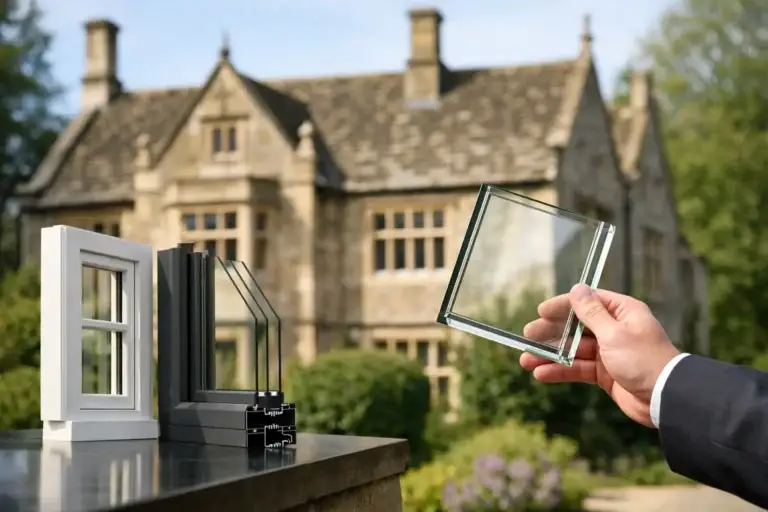
A listed timber sash window, a constrained façade zone or a refurbishment project with demanding U-value targets creates a familiar specification problem: how do you improve glass performance without changing the building’s appearance, frame depth or daylight character? That is where the question, is vacuum glazing worth it, becomes commercial as well as technical. For the right project, vacuum insulated glass can deliver a step change in thermal performance within a remarkably slim construction.
Is vacuum glazing worth it? Start with the performance brief
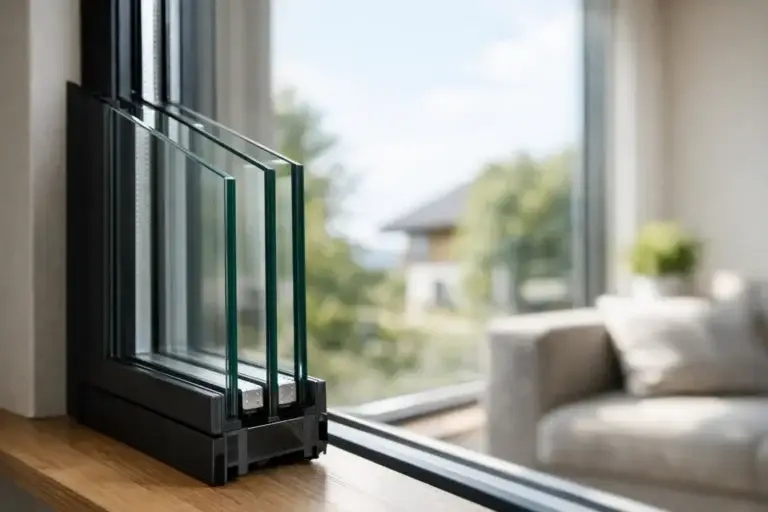
Vacuum insulated glass, often referred to as VIG, uses two panes separated by a very narrow evacuated gap. With virtually no air or gas between the panes to transfer heat, the glass can achieve high insulation performance at a fraction of the thickness of conventional double or triple glazing.
The central advantage is straightforward. Where triple glazing often requires a deep insulated glass unit and a compatible, wider frame system, vacuum glass can provide centre-pane U-values below 1.0 W/m²K in a slim unit. Exact performance depends on the product build-up, coatings, pane configuration, edge seal and installed frame, but the design opportunity is clear: high thermal resistance per millimetre of glass thickness.
This matters most when a project cannot simply accept a thicker unit. Existing timber, steel and aluminium frames may have limited rebate depth. Heritage buildings may require original sightlines to remain intact. Curtain walling and façade systems may have restricted glazing pockets. In these circumstances, vacuum glazing is not merely a premium alternative to double glazing. It can be the practical route to a performance level that conventional units cannot deliver without redesign.
A sound assessment must separate centre-pane values from whole-window or whole-façade values. Glass is only one part of the thermal envelope. Frame U-values, spacer and edge conditions, installation tolerances, perimeter sealing and thermal bridging all influence the final result. A high-performing VIG unit installed in a poor frame will not achieve the building-level result the specification promises.
Thermal performance without the depth penalty
For retrofit work, the slim profile is often the strongest reason to specify VIG. It can allow existing frames to be retained while substantially improving insulation. Retaining serviceable frames can reduce disruption, preserve architectural character and avoid the embodied carbon associated with full window replacement.
For new-build projects, the advantage is different. Vacuum glass gives architects and façade engineers greater freedom to pursue slender systems, reduced frame depth or restrained visual detailing without defaulting to a deep triple-glazed build-up. This can be particularly valuable where façade geometry, opening hardware, weight limits or structural loads place real limits on the glass specification.
Thickness also affects logistics. Lighter, slimmer units may be easier to handle than a comparable triple-glazed unit, although safe handling procedures and the individual product’s weight still need to be assessed. On complex refurbishment sites, that can reduce practical installation constraints.
The value case goes beyond U-values
Heating demand is usually the first driver, particularly for projects targeting low operational energy use, improved EPC outcomes or Passive House-aligned fabric performance. Lower heat loss through glazing can reduce the load placed on heating systems and improve internal comfort near windows during cold weather.
However, the financial case should not be reduced to a simple payback calculation based only on gas or electricity prices. Vacuum glazing can also create value by avoiding larger changes elsewhere in the design. If it removes the need to replace heritage frames, alter façade profiles, deepen reveals or redesign opening systems, its higher unit cost may be offset by lower intervention costs and fewer planning or conservation complications.
Occupant comfort has commercial value too. Cold inner glass surfaces can create radiant discomfort and downdraughts, even in rooms that meet the thermostat setting. Better insulating glass helps raise internal surface temperatures, making perimeter zones more usable. In offices, homes, hospitality spaces and public buildings, that can improve the perceived quality of the environment without expanding the heated floor area.
Vacuum insulated glass can also support acoustic performance, but this must be specified carefully. Glass thickness, laminated interlayers, asymmetrical panes, frame construction, air leakage and installation quality all affect sound reduction. VIG is not automatically the best answer to every noise problem simply because it has strong thermal performance. Where road, rail or aircraft noise is critical, the acoustic target should be modelled and tested as a complete glazed system.
Upfront cost versus lifetime value
Vacuum glazing costs more upfront than standard double glazing and, in many cases, more than conventional triple glazing. It is specialist technology, manufactured to exacting tolerances, with performance driven by advanced coatings, edge sealing and the evacuated cavity. For low-risk projects with deep modern frames and modest energy targets, a well-specified double or triple unit may offer better immediate value.
The calculation changes where thickness, heritage constraints or demanding fabric targets are non-negotiable. Comparing only price per square metre misses the cost of frame replacement, design amendments, additional structural allowance, lost internal space, programme disruption and future energy exposure.
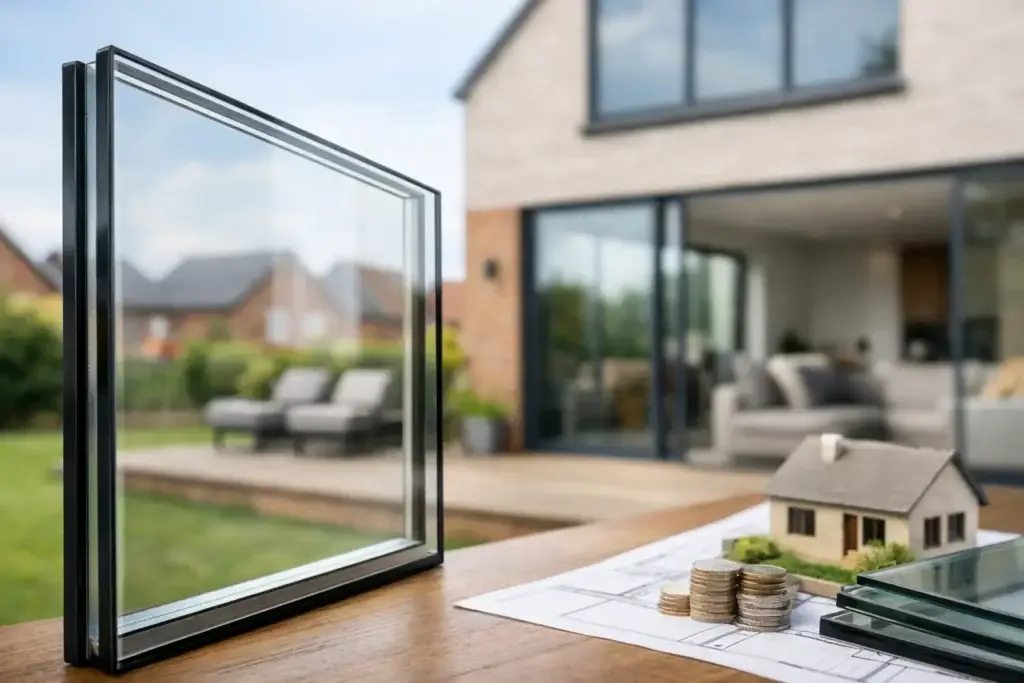
The right question is not whether VIG is cheaper at purchase. It is whether it produces the lowest whole-life cost for the required building outcome.
A robust commercial appraisal should account for the unit price, frame adaptation, installation labour, access requirements, heating and cooling demand, maintenance strategy, expected service life and the value of retaining existing fabric. For developers, it should also consider whether a slimmer high-performance glazing solution helps protect saleable area, planning commitments or architectural intent.
Durability should be considered alongside energy performance. The evacuated cavity and perimeter seal are integral to VIG performance, so product quality, manufacturing controls, warranty terms and evidence of long-term reliability are essential due-diligence points. Premium glazing should be specified as a long-term building component, not treated as a short-term materials substitution.
Where vacuum glazing delivers the strongest return
Heritage and conservation-led refurbishment is a natural fit. Traditional sash and casement windows often cannot accommodate a conventional double-glazed unit without major changes to glazing bars, putty lines, frame sections and overall appearance. Vacuum glass can enable a much slimmer upgrade while preserving the proportions that make the original window worth keeping.
It is equally compelling in high-performance retrofit programmes. Existing buildings account for a substantial share of operational energy use, and many have frames that remain structurally sound but contain poor-performing glass. Replacing the glazing rather than the entire window can reduce waste, retain embodied value and deliver a meaningful thermal improvement.
Commercial façades, high-end residential schemes, transport applications, refrigeration, agricultural environments and specialist industrial enclosures can also benefit where insulation must be achieved in a limited space. Each application needs its own technical review. Safety glass requirements, solar control, condensation risk, fire strategy, wind loading, visual quality and sealing details all remain part of the specification.
Werkman Tech’s vacuum glass solutions are designed for this performance-led decision-making, with options that support heritage-sensitive refurbishment, demanding façade applications and projects where thickness is a critical design constraint.
Specify the full system, not just the glass
The best VIG project begins with a defined performance brief. Establish the required whole-window U-value, acoustic target, safety classification, solar factor, light transmission, maximum unit dimensions and expected operating environment. Then assess the frame and installation detail against those requirements.
Ask whether the existing or proposed frame has an appropriate glazing rebate, drainage strategy and edge cover. Confirm compatibility with beads, gaskets, sealants and setting blocks. Review sightlines and the visual effect of the discrete support pillars found within vacuum glass. These are typically small, but they should be considered in applications with close viewing distances or highly reflective façades.
Condensation analysis is also essential. Better glazing reduces heat loss through the pane, but cold bridges at frames, reveals and junctions can still become the weak point. The specification should improve the envelope as a connected system rather than transfer risk from the centre of glass to the perimeter detail.
When another glazing option may be better
Vacuum glazing is not automatically the correct solution. A new-build project with generous frame depth, straightforward detailing and no aesthetic restriction may be well served by high-quality triple glazing. Likewise, a building with poor roof insulation, uncontrolled air leakage or inadequate wall insulation may gain more from addressing those weaknesses first.
It is also the wrong place to compromise on specification support. If the project requires unusual dimensions, complex shapes, severe exposure, high acoustic attenuation or specialist safety performance, confirm what is achievable before committing to a design. Performance-led glazing rewards early coordination between architect, façade consultant, fabricator and installer.
The most useful closing thought is this: vacuum glazing earns its place when it solves a constraint that ordinary glazing cannot. If your project needs exceptional insulation in a slim profile, needs to retain valued frames or must meet demanding fabric targets without sacrificing design intent, the premium is often justified long before the building reaches handover.