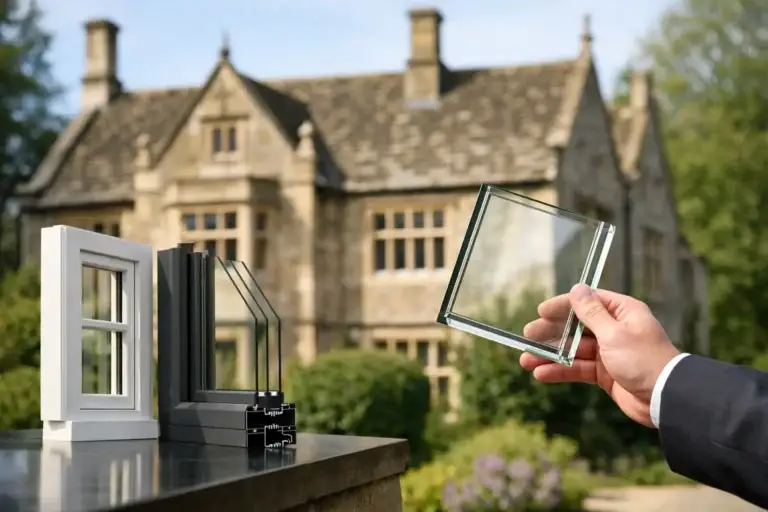
A listed sash window can be the weakest thermal element in an otherwise carefully upgraded building, yet it is usually the one element least open to alteration. That is where vacuum glazing for listed buildings changes the specification conversation. It offers a route to materially lower U-values and improved acoustic comfort without the bulk, cavity depth and visual compromise associated with conventional double or triple glazing.
For architects, conservation professionals and specialist contractors, the issue is rarely whether performance matters. It is how far performance can be improved while respecting historic fabric, original frame profiles and planning constraints. In listed buildings, glazing decisions are not simply technical. They sit at the junction of heritage significance, visual consistency, occupant comfort and long-term building use.
Why vacuum glazing suits heritage constraints
Traditional insulated glass units rely on wider cavities filled with air or gas to improve thermal performance. That approach works in many contemporary frames, but it quickly becomes problematic in listed buildings where glazing rebates are often shallow and sightlines are part of the building’s character. Thicker units can trigger extensive joinery alteration, loss of original material or outright rejection on heritage grounds.
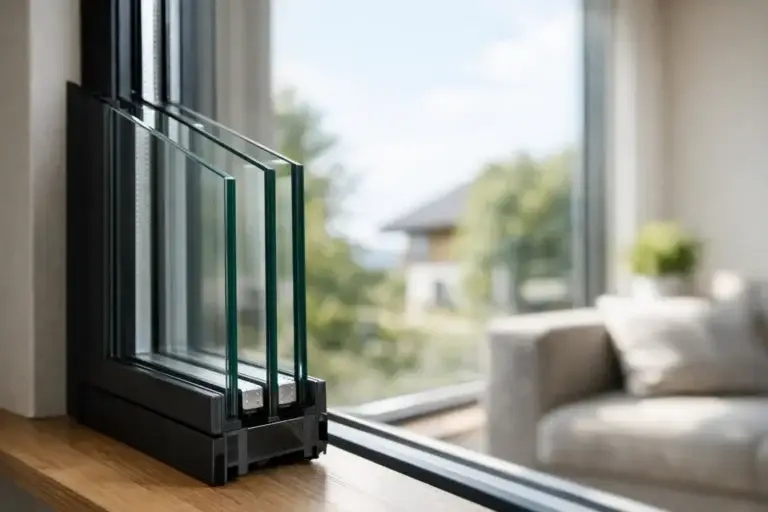
Vacuum insulated glass addresses the problem at the unit level. By removing gas from the cavity and creating a near-vacuum between panes, it delivers significantly improved thermal insulation in a much slimmer build-up. That slim profile is not a minor specification detail. It is often the difference between a viable heritage upgrade and a glazing proposal that requires unacceptable changes to timber sections, putty lines or glazing bars.
In practice, this means specifiers can target strong thermal outcomes while staying much closer to the original appearance of the window. For listed buildings, that visual compatibility is frequently the decisive factor.
Vacuum glazing for listed buildings and planning sensitivity
Conservation officers and heritage stakeholders tend to assess windows in terms of profile, reflectivity, section depth, material retention and overall visual rhythm across the façade. Any glazing solution for a listed property has to respond to those points directly.
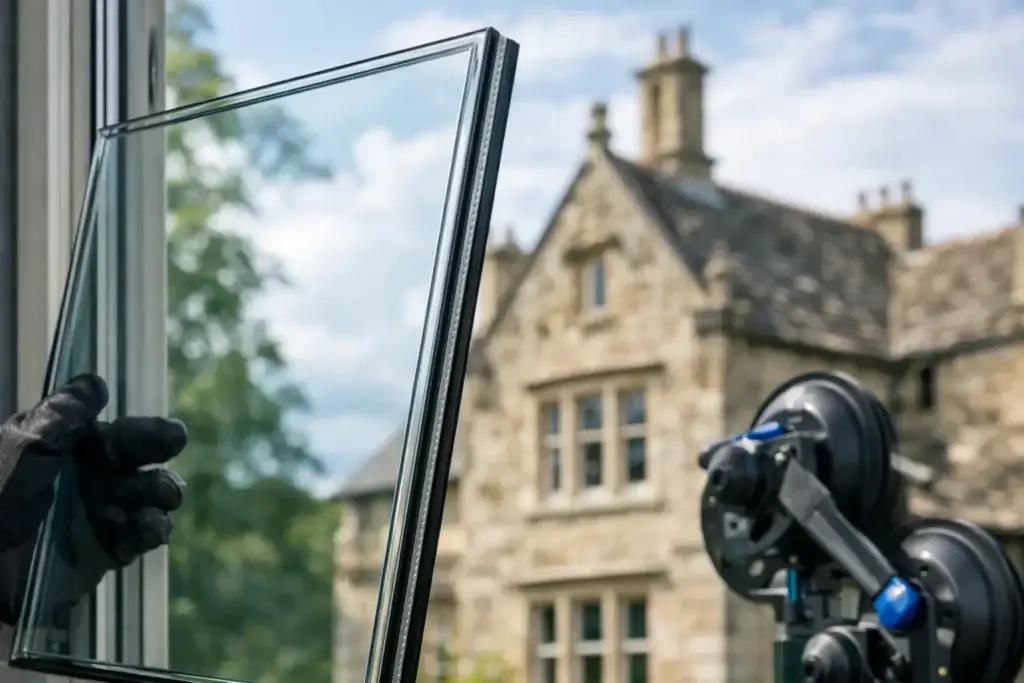
Vacuum glazing for listed buildings is attractive because it can preserve the fine proportions associated with historic fenestration. Where standard double glazing may require deeper glazing pockets, heavier sections or replacement sashes, vacuum glass can reduce that intervention. The result is a better chance of retaining original frames or replicating them accurately where replacement is unavoidable.
That does not mean approval is automatic. Listed building consent depends on the significance of the asset, the extent of proposed change and the local authority’s approach. In some high-significance settings, even a technically superior glazing solution may face scrutiny if it alters historic glass character or requires removal of important fabric. The point is not that vacuum glass bypasses heritage controls. It gives project teams a much stronger technical and visual case when compared with bulkier alternatives.
Where the performance gain is most valuable
The strongest case usually appears in buildings with persistent comfort problems, high heating demand or façades exposed to traffic noise. Country houses, civic buildings, schools, hotels and converted heritage assets often fall into this category. Occupants expect modern levels of comfort, but the envelope was never designed for contemporary thermal standards.
In those settings, glazing is one of the few upgrade opportunities capable of delivering a measurable operational benefit without changing the external architecture. Lower heat loss through the window can support reduced energy demand and improved internal surface temperatures, which in turn helps mitigate cold downdraughts and condensation risk. Acoustic performance can also improve significantly, which matters in urban conservation areas where external noise has risen far beyond historic levels.
Performance matters, but compatibility decides the project
It is easy to focus only on centre-pane insulation values, yet heritage projects are won or lost on compatibility. A high-performance unit that cannot be integrated cleanly into the existing frame is rarely the right answer.
That is why specification should start with the frame condition, rebate depth, putty line detail and overall conservation strategy. Some listed windows can accept vacuum glass within existing timber sections with only limited adaptation. Others require specialist refurbishment, secondary adjustments or complete remanufacture to achieve the intended finish and structural integrity. The best technical glass on the market will still underperform if the surrounding joinery is unstable, poorly sealed or dimensionally unsuitable.
This is also where slim vacuum units can outperform triple glazing in heritage contexts. Triple glazing may promise strong thermal values in new-build envelopes, but in listed buildings its thickness, weight and frame demands often make it impractical. The engineering question is not which format sounds most impressive on paper. It is which glazing system delivers the best whole-window result within real heritage constraints.
The trade-offs specifiers should expect
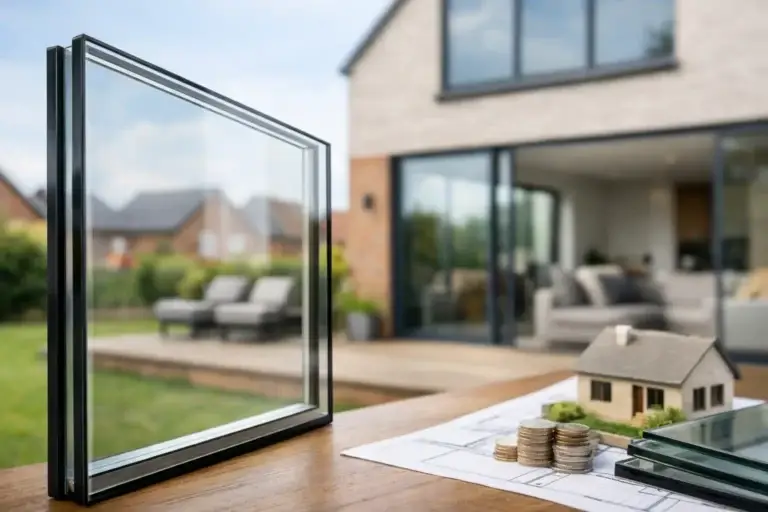
There are trade-offs, and serious project teams should state them early. Vacuum glass is a premium product and the capital cost is typically higher than standard insulated units. For heritage projects, however, cost comparison needs to account for avoided joinery alteration, improved consent viability, reduced energy loss and the value of preserving appearance.
There may also be project-specific considerations around edge detailing, unit sizing, manifestation of support pillars and visual expectations at very close range. In most practical applications, these issues are manageable, but they should be assessed honestly through samples and mock-ups rather than ignored in a sales conversation.
Historic buildings are not standardised products. A Georgian townhouse, a Victorian hall and an interwar civic building each present different technical and conservation demands. The right answer depends on significance, condition, use pattern and performance target.
Detailing vacuum glazing for listed buildings
Good heritage glazing specification is rarely about one component in isolation. The detailing around the glass matters just as much as the glass itself.
For timber windows, the relationship between the unit thickness and the existing bead or putty profile is critical. If the glazing can sit within the original visual depth of the sash, the upgrade remains discreet. If the detail starts to look heavier or flatter, the heritage benefit narrows quickly. Surface reflectivity and colour tone should also be reviewed, particularly on prominent principal elevations.
On refurbishment schemes, project teams should examine frame moisture condition, paint build-up, joint movement and ironmongery performance before confirming unit design. There is little value in introducing advanced glazing into a window that is nearing structural failure. By contrast, where the frame can be repaired and retained, vacuum glass can extend the useful life of the existing assembly while bringing it closer to modern expectations.
This performance-led but conservation-aware approach is where specialist manufacturers add real value. Companies such as Werkman Tech position vacuum insulated glass not as a compromise product, but as a high-engineering solution capable of delivering low U-values, long service life and acoustic improvement in demanding applications where conventional units are too thick or too limited.
Retrofit strategy, not just product selection
The strongest listed building outcomes usually come from a broader retrofit strategy. Glazing should be considered alongside draught sealing, frame repair, ventilation balance and moisture management. Upgrading the pane without addressing air leakage around the sash leaves a large part of the performance gap untouched.
Equally, reducing heat loss through windows can alter internal humidity patterns. In heritage buildings with solid walls and variable ventilation, that needs to be understood properly. Better glazing often improves comfort and reduces condensation at the glass surface, but moisture behaviour elsewhere in the building still requires attention.
For this reason, specification should involve both conservation judgement and building physics. The market has moved beyond the old assumption that listed buildings must remain thermally inefficient to remain authentic. The more relevant question is how to improve them intelligently, with the least visual and material disruption.
Vacuum glazing answers that question well because it aligns performance with restraint. It is not always the cheapest route, and it is not automatically suitable for every heritage scenario. But where slimness, thermal efficiency, acoustic control and façade integrity all matter at once, it offers a level of balance that standard glazing systems struggle to match.
For listed buildings expected to serve modern occupiers for decades to come, that balance is often what turns a difficult window upgrade into an approvable, defensible and commercially sound specification. The best heritage interventions do not announce themselves loudly – they simply make old buildings work better.