A glazing specification can look deceptively simple on paper. Two panes, a cavity, a spacer, a quoted U-value. Yet when a façade misses thermal targets, suffers condensation risk or fails to control noise, the detail inside that glass unit suddenly matters. So, how does insulated glass work? It works by slowing the three main routes of heat transfer – conduction, convection and radiation – while also improving comfort, reducing energy demand and, in the right configuration, delivering meaningful acoustic control.
How does insulated glass work in practice?
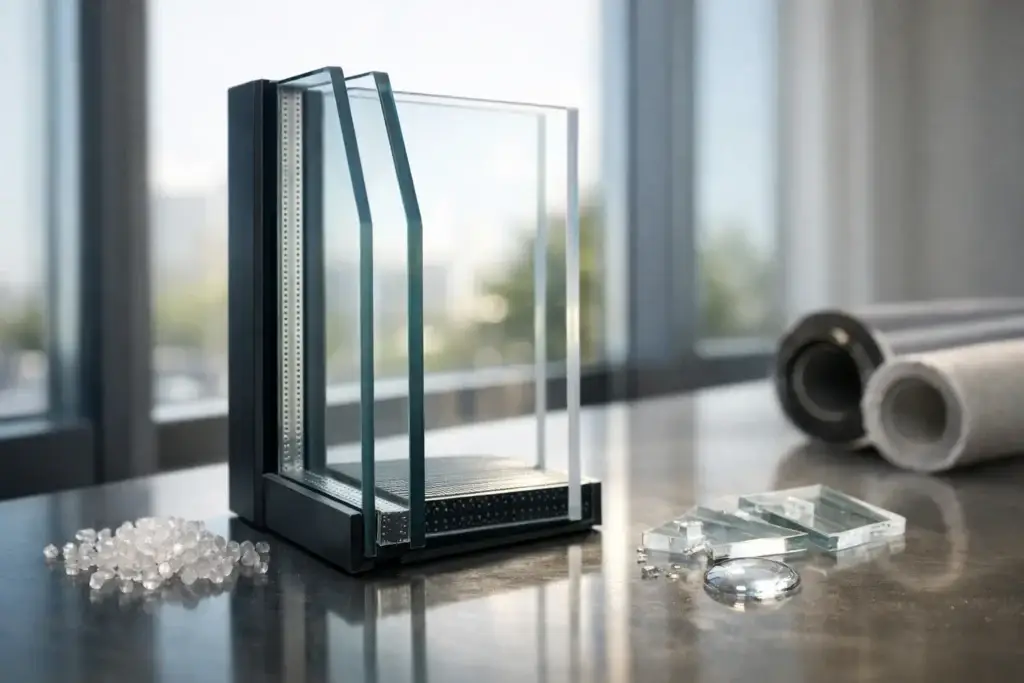
At its most basic, insulated glass uses two or more panes separated by a sealed space. That space is not there for appearance. It is the active thermal barrier. In a standard insulating glass unit, the cavity is commonly filled with air or an inert gas such as argon. In a vacuum insulated glass unit, the cavity is evacuated to create a near-vacuum, which reduces heat transfer far more aggressively.
The principle is straightforward. Glass itself is a poor insulator compared with a wall build-up, so a single pane loses heat quickly. Add a second pane and separate it from the first, and the system becomes significantly harder for heat to pass through. Add specialist low emissivity coatings, high-performance edge seals and an optimised cavity, and the unit becomes a serious part of the building envelope rather than just a transparent opening.
For specifiers and façade professionals, the key point is that insulated glass is not one technology. It is a category. Double glazing, triple glazing and vacuum insulated glass all sit within it, but their performance profiles are very different.
The three ways heat moves through glass
To understand why some units outperform others, it helps to look at the physics.
Conduction
Conduction is heat moving through a solid material. In glazing, that means heat passes through the glass panes themselves, through the spacer area at the edge and through any gas or air trapped between panes. Better insulated glass reduces conductive heat flow by interrupting this path with cavities, low-conductivity gases and improved edge design.
Convection
Convection happens when air or gas inside a cavity circulates. Warm gas rises, cool gas falls, and that movement carries heat from the warm side of the unit to the cold side. In conventional double glazing, cavity width affects how much convection takes place. Too narrow and conduction dominates. Too wide and convection currents increase.
This is one reason cavity design is a real engineering question, not a generic spacing exercise. Vacuum insulated glass changes the equation because there is little or no gas present to circulate, so convective heat transfer is largely eliminated.
Radiation
Radiation is the transfer of heat as infrared energy. Even if conduction and convection are reduced, radiant heat can still move across the cavity from one pane to another. That is where low emissivity coatings become critical. A low-E coating reflects radiant heat back towards its source, keeping indoor warmth inside during winter and helping limit solar-related heat gain in some configurations.
When these three mechanisms are controlled together, the glass unit delivers lower U-values and a more stable internal environment.
What the cavity actually does
The cavity is the core of insulated glass performance. In a standard unit, the sealed gap between panes introduces a layer that resists heat movement better than solid glass alone. If the cavity is filled with argon or another inert gas, thermal performance improves further because those gases conduct less heat than ordinary air.
However, standard gas-filled units still rely on a physical gap wide enough to work efficiently. That increases overall thickness, which can create limitations in refurbishment, heritage applications and slimline framing systems.
A vacuum cavity is different. Because a vacuum contains almost no matter, there are virtually no gas molecules available to transfer heat by conduction or convection. That allows a very thin unit to deliver thermal performance that conventional double glazing cannot match at the same build-up, and that can rival or exceed much thicker triple glazing depending on the specification.
This matters where frame depth, sash weight, sightlines and retrofit compatibility are under pressure. In those cases, the question is not just how does insulated glass work, but which insulating method works best within the physical limits of the project.
Why coatings and edge details matter
Not all thermal loss happens through the centre of the glass. Edge performance can materially affect the whole unit.
Low-E coatings are one part of the answer. Applied to the correct internal glass surface, they reduce emissivity and reflect radiant heat. Without them, even a decent cavity will underperform against current expectations.
The spacer system is equally important. Traditional metal spacers can act as thermal bridges around the perimeter, increasing edge losses and raising the risk of condensation at the glass margin. Warm edge technology reduces that weakness by using lower-conductivity materials.
Then there is the seal. The cavity only works if it remains stable over time. Gas retention, moisture control and long-term durability are not secondary considerations. They are central to lifecycle performance. A unit that starts strong but degrades early is a poor commercial choice, however attractive the initial cost appears.
How insulated glass affects comfort, not just compliance
U-value is the headline metric, but building users experience glazing in more direct ways. They feel downdraughts beside cold panes. They notice cold radiation from windows in winter. They see condensation when internal glass temperatures drop too far. And they hear the consequences when the acoustic make-up is wrong.
Higher-performing insulated glass improves surface temperatures on the room side. That means spaces feel more comfortable at the perimeter, reducing the sense of chill that often leads occupants to increase heating. In practical terms, better glazing can support lower operational energy use and a more usable area close to the façade.
For developers and asset owners, that translates into more than compliance. It can influence occupant satisfaction, service demand and long-term running costs.
Acoustic performance – where it depends
Many buyers assume all insulated glass will automatically solve noise issues. It will not. Acoustic performance depends on pane thickness, asymmetry, interlayers, cavity behaviour and frame installation, not just the fact that the unit is insulated.
A standard double-glazed unit may reduce sound better than single glazing, but not enough for transport corridors, mixed-use urban sites or plant-heavy environments. In those conditions, the acoustic specification has to be engineered separately from the thermal brief, even though the two interact.
Vacuum insulated glass can offer strong acoustic benefits because of its construction, but performance still depends on the overall system. There is no single glazing build-up that is best in every setting. A school near a busy road, a listed townhouse, and a commercial façade with strict energy targets may all require different answers.
How vacuum insulated glass changes the benchmark
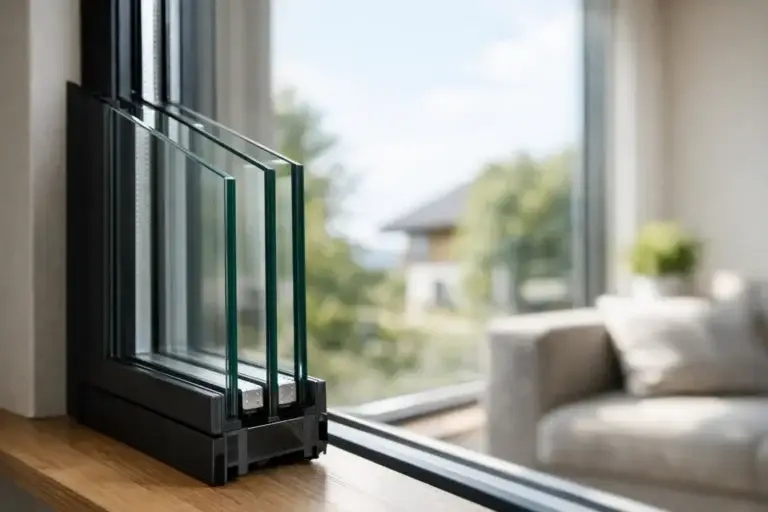
This is where the category separates. Conventional double glazing improves performance by using a gas-filled cavity. Triple glazing adds another pane and another cavity, increasing insulation but also thickness and weight. Vacuum insulated glass takes a different route. It removes the gas almost entirely.
That shift is technically significant. With conduction and convection across the cavity sharply reduced, vacuum glass can achieve exceptionally low U-values in a much slimmer profile. For projects where thermal performance, frame compatibility and embodied impact all matter, that is not a marginal gain. It is a different level of engineering efficiency.
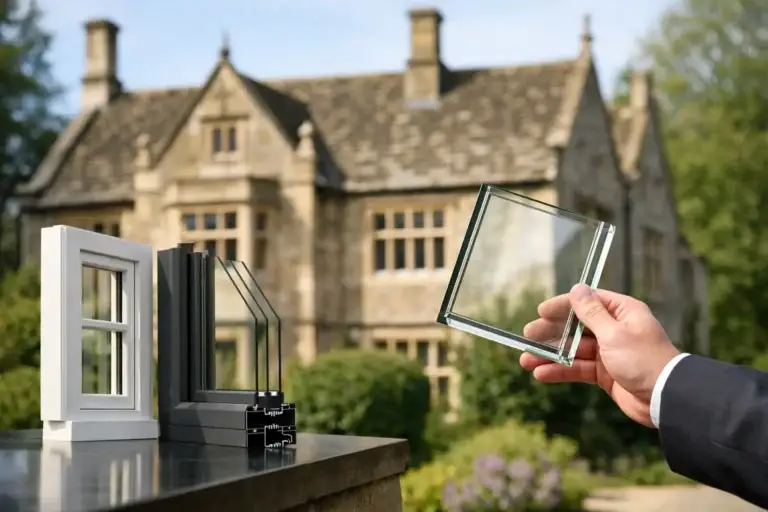
It also has practical implications. Thinner, lighter high-performance glazing can be particularly valuable in heritage upgrades, specialist façades and applications where replacing frames is undesirable or impossible. For professionals balancing conservation, planning constraints and modern energy standards, this is often where the specification conversation changes.
Companies such as Werkman Tech have pushed this technology into a commercially serious option for projects that cannot afford compromise on performance, durability or sustainability.
What to look for when specifying insulated glass
The right question is not simply whether insulated glass works. It is how well a given unit works for the demands of the building.
Start with the performance target. If the project is driven by Passive House criteria, demanding façade standards or aggressive energy reduction goals, standard double glazing may not be enough. Then look at thickness, weight and framing constraints. Triple glazing can be effective, but its additional bulk is not always practical. After that, assess acoustic needs, condensation risk, orientation, solar control and expected service life.
Specification should also distinguish between centre-pane performance and whole-window performance. Excellent glass can be undermined by weak frames, poor installation or substandard edge detailing. The unit must be considered as part of a complete envelope system.
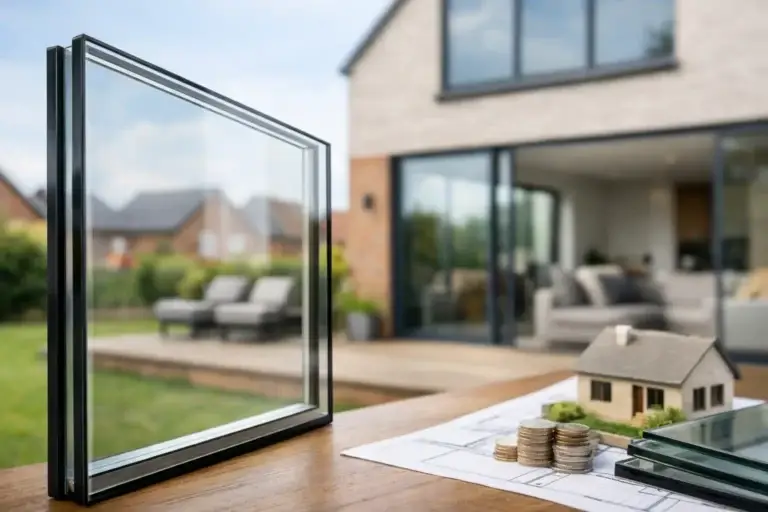
Cost also needs a lifecycle view. Lower upfront glazing costs can be offset by higher energy use, earlier replacement and poorer occupant comfort. In premium building applications, cheapest and best rarely mean the same thing.
Insulated glass works by creating barriers to heat transfer, but the real value lies in how precisely those barriers are engineered for the job. If the project demands slim build-ups, very low U-values, strong acoustic control and long-term efficiency, the better question may be not whether to use insulated glass, but whether conventional insulated glass is still enough.