A pane of glass is one of the weakest parts of the building envelope – unless it is engineered to interrupt heat flow. That is the real answer behind the question, how does insulated glass work: it slows down heat transfer across the glazing unit, so interiors stay warmer in winter, cooler in summer and far more stable all year round.
For architects, specifiers and contractors, the detail matters. Not all insulated glass works in the same way, and not all formats deliver the same result. Standard double glazing, triple glazing and vacuum insulated glass all aim to improve thermal performance, but they do so through different constructions, different physics and very different performance ceilings.
How does insulated glass work in practice?
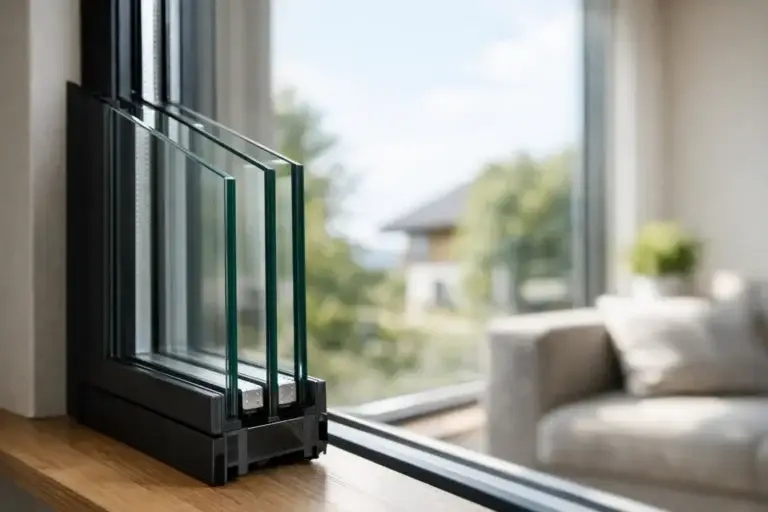
Insulated glass works by combining multiple barriers to heat movement. In a conventional insulated glass unit, two or more panes are separated by a sealed cavity. That gap is usually filled with air or an inert gas such as argon. The cavity reduces conductive and convective heat transfer, while specialist low-emissivity coatings help limit radiant heat loss.
In simple terms, the system works because heat does not pass through the unit as easily as it does through a single pane. Instead of a direct thermal bridge from inside to outside, the cavity and coatings create resistance. The better the engineering, the lower the U-value and the stronger the insulation performance.
There are three main forms of heat transfer at play. Conduction is heat moving through solid materials. Convection is heat circulating within the cavity. Radiation is heat emitted from one surface to another. Effective insulated glass is designed to reduce all three.
That is why the phrase insulated glass can cover a broad category, but not a single performance standard. A basic unit and a high-specification glazing system may look similar at first glance, yet behave very differently in service.
The core parts of an insulated glass unit
Most insulated glass units rely on the same basic components. The glass panes provide the structural surfaces. The spacer sets the gap between panes. The perimeter seal keeps the cavity closed and protects the internal environment from moisture ingress. If the cavity is gas-filled, that seal is even more critical because long-term performance depends on retaining the gas content.
Low-E coatings are one of the most important additions. These microscopically thin metallic layers reflect heat back towards its source. In heating-dominated conditions, that means internal heat is reflected back into the building rather than escaping through the glazing.
Spacer design also affects performance. Traditional metal spacers can create thermal bridging at the edge of the unit, increasing heat loss and raising the risk of condensation around the perimeter. Warm-edge spacers improve this area, but the centre-pane result still depends on the glazing build-up itself.
Then there is cavity width. In conventional double and triple glazing, the gap between panes needs to be carefully balanced. Too narrow and the insulating benefit is reduced. Too wide and convective currents can become more active, which starts to undermine performance.
Why vacuum insulated glass changes the equation
Vacuum insulated glass works on the same overall objective as conventional insulated glass, but with a fundamentally different approach. Instead of relying on a gas-filled cavity, it uses a vacuum between two panes. Because a vacuum contains virtually no gas particles, conductive and convective heat transfer through the cavity are dramatically reduced.
That matters because gas-filled units are always working within the limits of the gas medium. A vacuum removes most of that pathway. Heat still moves through the glass itself and through the tiny support pillars used to maintain the separation between panes, but the overall thermal loss is far lower than in standard double glazing and often superior to much thicker triple glazing.
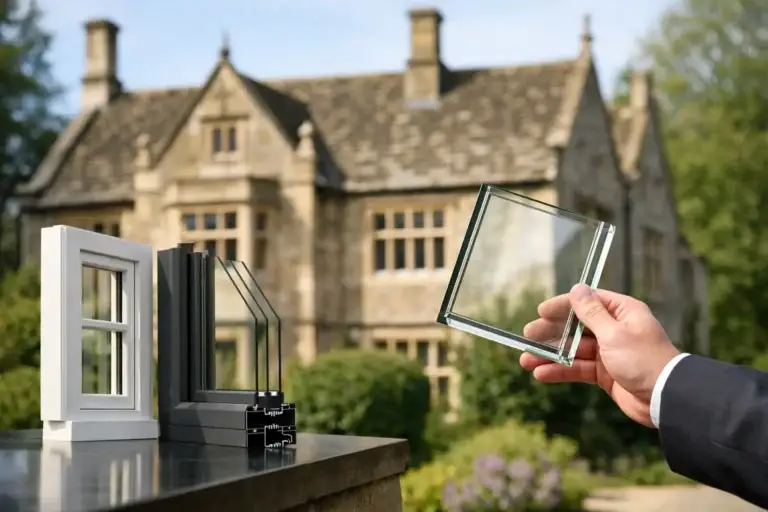
This is where high-performance vacuum insulated glass stands apart. It can achieve exceptionally low U-values in a slim profile, making it particularly valuable where frame depth, heritage sightlines or façade weight are constrained. For refurbishment and listed applications, that can be the difference between an acceptable upgrade and a compromised one.
Vacuum construction also helps with durability and consistency when engineered correctly. There is no gas fill to diffuse over time in the same way as a conventional unit. The performance proposition becomes not just lower heat loss, but long service life, reduced energy demand and a stronger lifecycle case.
Thermal performance is only part of the story
When people ask how insulated glass works, they often mean thermal insulation alone. In reality, the best systems deliver a wider set of outcomes.
Acoustic performance is one of them. Multi-layer constructions and specialist glass make-ups can reduce external noise, which is particularly relevant in urban developments, transport-facing buildings and mixed-use schemes. The exact result depends on thickness, asymmetry and full system design, but insulated glass can contribute significantly to occupant comfort.
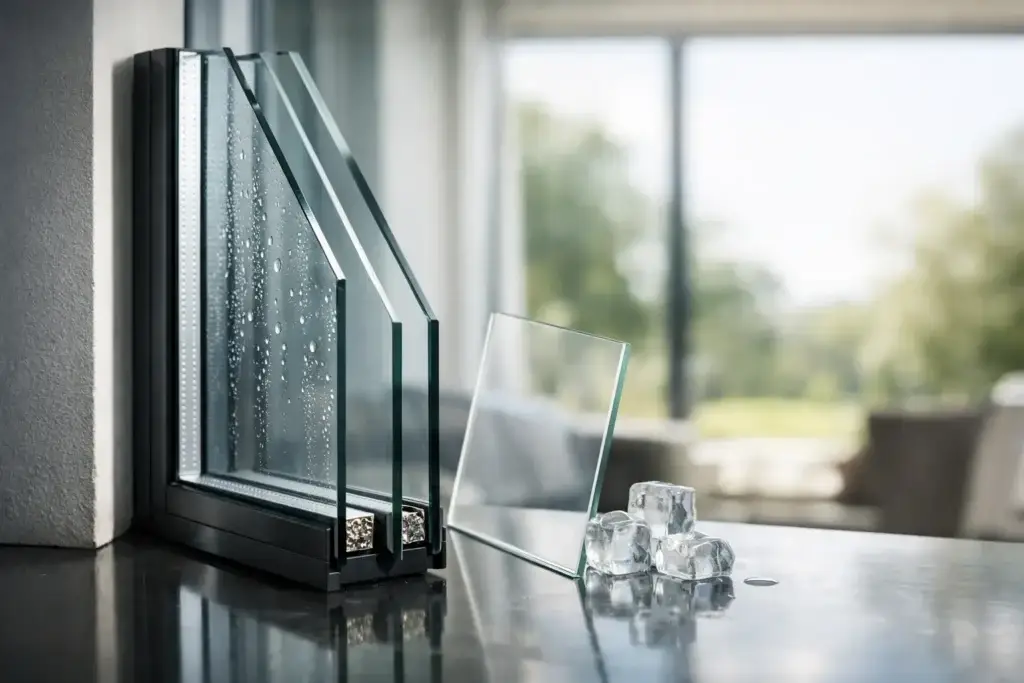
Condensation control is another benefit. Better internal surface temperatures reduce the risk of condensation forming on the room-facing side of the glass. That improves comfort, protects surrounding materials and supports healthier internal environments.
Solar management also comes into play. Depending on the coating specification, insulated glass can help limit unwanted solar gain while preserving daylight. That balance is not universal. A building in a dense city centre, a south-facing office façade and a heritage residential retrofit may all require different glazing priorities.
Where conventional double and triple glazing fall short
Standard double glazing remains common because it is familiar, widely available and lower in initial cost. For many basic applications, it is an improvement over single glazing. But it has clear limits where demanding thermal targets, narrow frame sections or premium lifecycle performance are required.
Triple glazing can improve insulation further, yet it introduces trade-offs. It is thicker, heavier and often harder to integrate into existing frames or slender façade systems. Additional weight affects handling, installation and sometimes supporting structure. In refurbishment settings, those constraints can quickly become decisive.
This is why high-performance vacuum insulated glass is increasingly specified as a direct upgrade path. It offers insulation levels that challenge or exceed triple glazing, but in a much slimmer and lighter construction. That creates more freedom for architects and façade consultants without sacrificing the thermal agenda.
For commercially serious projects, the comparison cannot stop at headline glass count. Two panes with advanced engineering may outperform three panes with conventional construction. The question is not how many layers there are, but how effectively the unit restricts heat transfer over time.
How does insulated glass work when specification gets complex?
At specification stage, insulated glass must be judged as part of a full system. Centre-pane performance is useful, but real buildings depend on whole-window outcomes, frame interaction, edge detailing, installation quality and exposure conditions.
A low U-value on paper does not operate in isolation. Frame conductivity, spacer choice, seal durability and installation tolerances all influence final results. For Passive House and other high-performance applications, small weaknesses at interfaces can have disproportionate consequences.
There is also the matter of application fit. A heritage project may prioritise slim profiles and visual compatibility. A commercial development may focus on energy modelling, façade loads and operational savings. Industrial and specialist sectors may value temperature stability, resilience and acoustic control above all else.
That is why specification-led glazing decisions outperform generic product selection. The right insulated glass solution is the one that meets the thermal target, suits the frame system, aligns with the use case and justifies itself over the building lifecycle.
The commercial case for better insulated glass
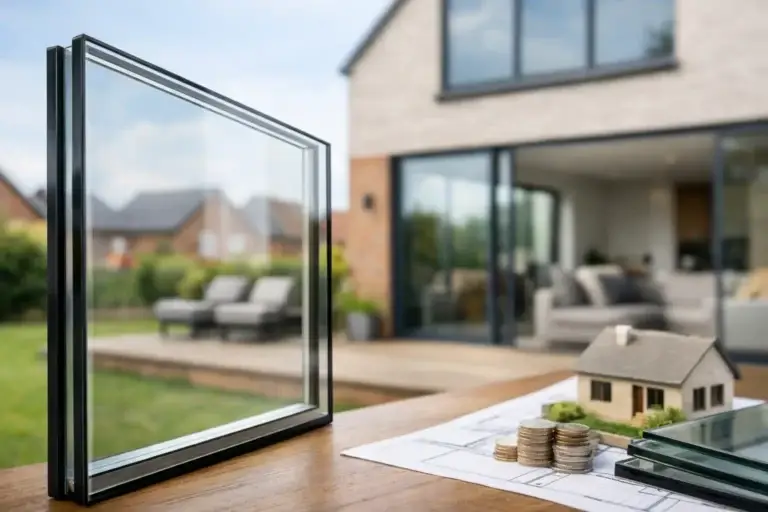
Performance-led buyers rarely make glazing decisions on unit cost alone. They look at energy use, occupant comfort, compliance risk, maintenance profile and long-term asset value.
Better insulated glass reduces heat loss, which can lower heating demand and support operational carbon targets. In buildings with extensive glazing, that effect is substantial. When paired with a high-performing frame and correct installation, advanced glazing can materially improve overall envelope efficiency.
There is also a space-saving argument. Slimmer high-performance units can preserve internal area, reduce façade bulk and maintain design intent. In premium developments and retrofit work alike, that flexibility has real commercial value.
For projects under pressure to reduce embodied and operational carbon together, the specification conversation is shifting. Heavier, thicker and more material-intensive glazing is not always the smartest route. Precision-engineered vacuum insulated glass offers a materially leaner way to reach very high performance levels, which is why companies such as Werkman Tech position it as a more advanced alternative to conventional insulating glass formats.
Insulated glass works by resisting heat transfer. The most advanced versions do far more than that – they sharpen thermal performance, improve comfort, support compliance and open up design options that conventional units struggle to match. If the project brief is serious about energy efficiency, durability and measurable building performance, the glazing specification deserves the same level of scrutiny as any other critical part of the envelope.