For decades, ultra-slim aluminium has been the undisputed material of choice for modern architecture. Architects and fabricators prize it for its outstanding strength-to-weight ratio, its inherent rigidity, and the sleek, minimalist aesthetics it enables. These qualities have allowed the creation of ever-larger expanses of glass, blurring the boundary between interior and exterior. However, as global thermal regulations tighten and client demand for sustainable, net-zero buildings intensifies, the glazing units we install within these aluminium frames must evolve. The industry’s standard response to greater insulation requirements has been to add more layers of glass and widen the gas-filled cavities. The result is heavy, bulky triple-glazed units that challenge standard frame designs, increase logistical costs, and strain material budgets. Simply put, conventional insulating glass units (IGUs) are reaching their physical and practical limits.
Vacuum Insulated Glass (VIG) presents a genuine paradigm shift. Rather than fighting against the laws of physics with more mass, VIG works with them. It allows you to amplify the inherent strengths of aluminium—slimness, structural strength, and modern aesthetics—while simultaneously achieving world-leading sustainability metrics and thermal performance.
The Perfect Marriage of Ultra-Slim Profiles
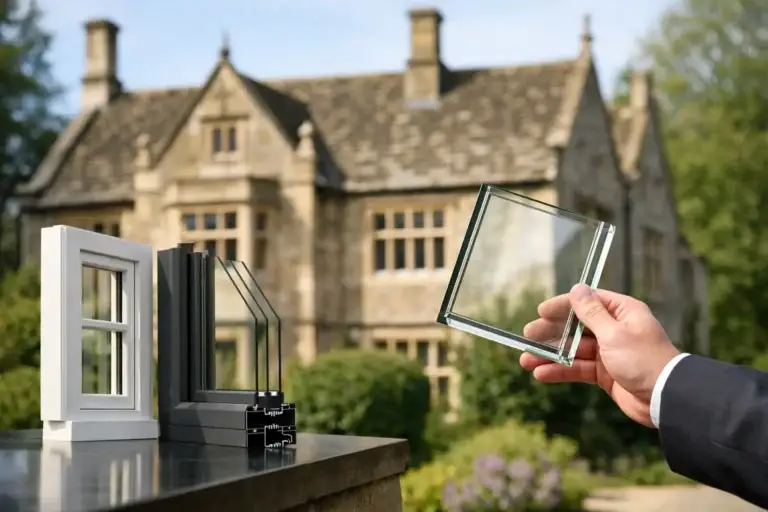
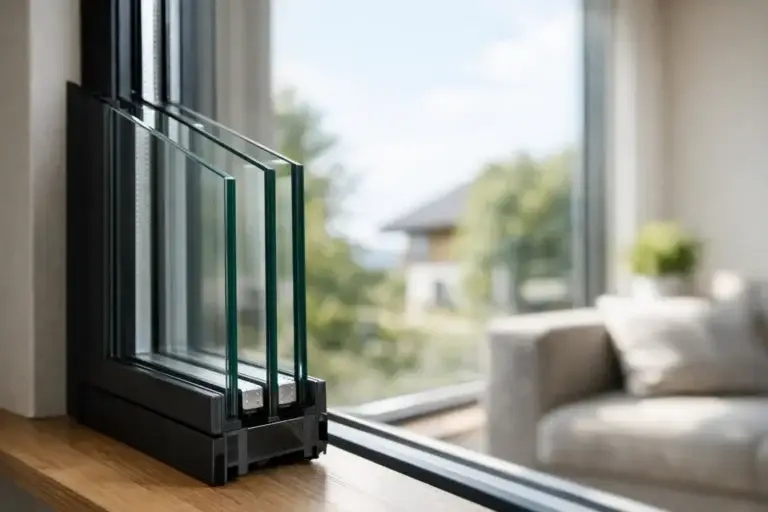
The hallmark of a contemporary aluminium window is its clean, minimalist line. The ultra-thin profile of vacuum glass—slim as 8.15mm total thickness—is the perfect glazing partner for this design philosophy. Unlike bulky triple glazing, VIG allows any framing system to maintain exceptionally narrow sightlines, as the glazing no longer dictates a deep, expensive rebate. This advantage is particularly powerful for retrofit projects, where VIG can often replace monolithic single glazing directly into existing aluminium frames. An instant upgrade transforms a building from a thermal liability into a high-performance asset without replacing the entire window system. In new builds and curtain walling, vacuum insulated glass also delivers an improved weighted sound reduction starting from 39dB, eliminates the distracting double reflection and large-sheet gas distortion common in conventional IGUs, and—having no dew point—prevents internal condensation entirely.
Uncompromising Thermal Performance
Do not let the slim profile deceive you. Werkman Tech vacuum glass is a thermal powerhouse. Heat cannot transfer across a pure vacuum, no matter how narrow the cavity, leaving only solar radiation for the vacuum’s low-E coating to manage. By eliminating gas and all other particles that could conduct heat within the cavity, vacuum units provide the ultimate insulated glass solution. With certified U-values starting from an incredible 0.25 W/m²K, VIG outperforms every other glazing option currently available worldwide. This means you can confidently specify vacuum insulated glass for a simple domestic glass upgrade, all the way up to large commercial and industrial builds and demanding Passive House projects. Werkman Tech vacuum units have been Passive House Institute certified components since 2018, in conjunction with our GVG ranges. Our philosophy is simple: to be the best. Every product range we develop is designed to beat the most demanding specifications and push the boundaries of energy efficiency.
A New Benchmark for Green Building
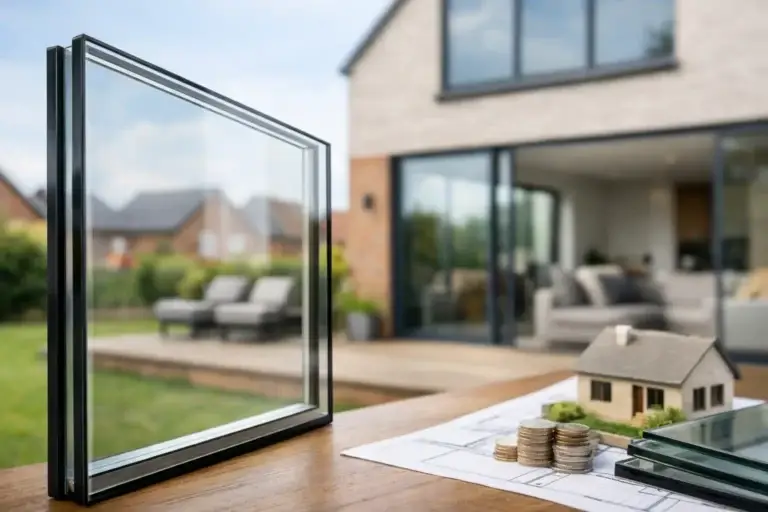
For forward-thinking clients, the sustainability story of VIG is as compelling as its performance. In an industry rightly focused on whole-life carbon, VIG offers a significant advantage from day one. First, it delivers dramatically lower embodied carbon. By using two panes of glass instead of three, and avoiding heavy gas fills and complex multi-chamber spacer systems, VIG drastically reduces upfront emissions. Certified Environmental Product Declarations for advanced VIG units show a Global Warming Potential (GWP) of just 18.9 kg CO₂-eq./m²—a fraction of the 65.9 kg CO₂-eq./m² for typical triple glazing. Second, VIG is designed for deconstruction. Its construction is inherently cleaner, lacking the butyl, plastic, and multiple sealant components found in traditional IGUs. As a result, it is far easier to recycle at the end of its expected lifespan of over 60 years, aligning perfectly with the circular economy principles shaping the future of construction.
With Werkman Tech’s vacuum insulated glass, you can finally offer clients an aluminium window system that is lighter, more elegant, and carries a profoundly lighter touch on the planet—all while delivering the highest possible thermal and acoustic performance that can be demanded.